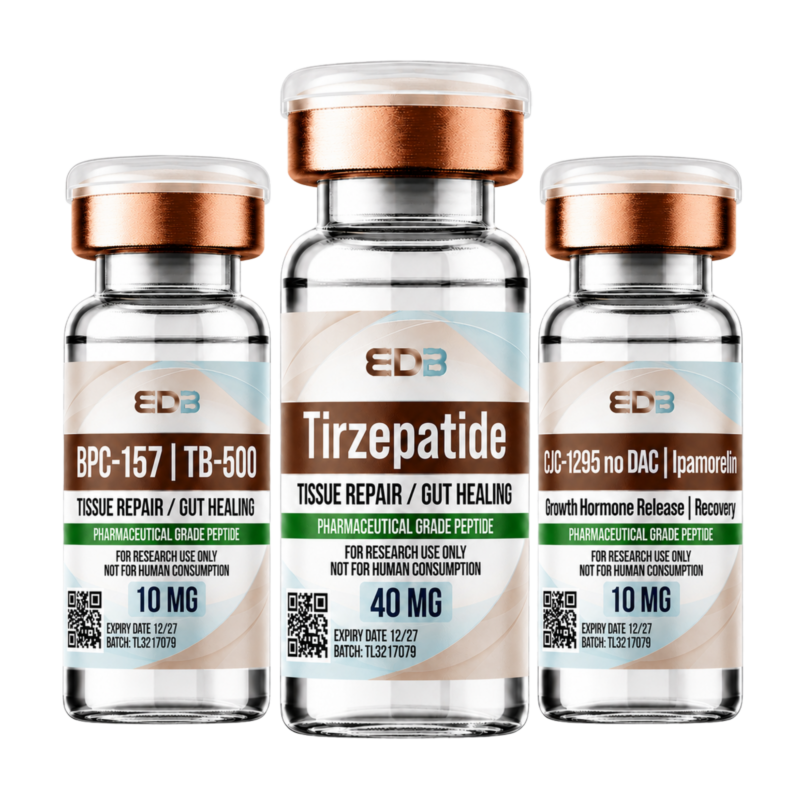
A vial label can identify a compound, strength, and lot number. It cannot, by itself, demonstrate what is inside the vial. For purchasers of third party tested research peptides, the meaningful quality signal is the documentation that connects a specific lot to defined analytical results.
That distinction matters in research settings where a material’s identity, purity profile, concentration, and handling history can affect experimental consistency. A supplier may describe a product as high purity, laboratory tested, or premium grade. Those statements are useful only when they are supported by records that a purchaser can review and match to the inventory received.
What Third Party Tested Research Peptides Should Mean
Third-party testing means analytical work is performed by an independent laboratory rather than solely by the company selling the material. The purpose is not to create a marketing label. It is to provide an outside measurement of defined quality attributes for a particular batch or lot.
For peptide materials, the most relevant attributes commonly include identity and purity. Depending on the product and available method, documentation may also address peptide content, molecular mass, chromatographic profile, residual solvents, moisture, or microbiological parameters. Not every analysis applies to every peptide format, so a complete review starts with a practical question: what was tested, using which method, and for which lot?
A certificate of analysis, often called a COA, is the central document in that review. It should not be treated as a decorative attachment. It is a batch-specific record that helps the purchaser assess whether the material shipped aligns with the stated product specification.
Start With Lot-Level Traceability
The most useful COA is one that can be tied directly to the vial or package in hand. Compare the lot or batch number on the certificate with the lot number printed on the product label. Confirm the compound name, vial format, and, where stated, the testing or release date.
A generic report for a compound is less informative than a report attached to the actual lot purchased. A chromatogram or purity value may look favorable, but it does not establish the status of unrelated inventory. Lot-level documentation closes that gap.
Traceability also supports better internal recordkeeping. Research purchasers can retain the COA alongside receiving records, storage logs, reconstitution notes, and experimental documentation. If a future question arises, the material can be identified without relying on memory or a product page that may later change.
For repeat purchases, lot changes deserve attention. A new lot is not inherently a concern. It is normal in a properly managed inventory cycle. The disciplined approach is to retrieve and review the documentation for each new lot rather than assuming that prior results apply indefinitely.
Match the Product Name Carefully
Similar peptide names can represent materially different products. BPC-157 is not interchangeable with a BPC-157/TB-500 blend. CJC-1295 no DAC and CJC-1295 with DAC are distinct materials. A branded multi-peptide offering should be documented as the stated blend, not inferred from a report for one component.
The same care applies to salt forms, acetate references, and nominal vial quantities. A report should identify the material clearly enough that an experienced purchaser can determine whether it corresponds to the ordered product. When the naming is vague, ask for clarification before relying on the result.
How to Read a COA Without Overreading It
A COA provides evidence within the limits of its listed methods and specifications. It is not a blanket guarantee of every possible quality attribute. Reading it well requires attention to both what it says and what it does not say.
Identity testing commonly relies on mass spectrometry or related analytical methods. The reported molecular mass should be consistent with the expected peptide. This helps establish that the tested material corresponds to the claimed compound, but identity alone does not establish purity or quantify impurities.
Purity is often evaluated with high-performance liquid chromatography, or HPLC. The reported percentage reflects the method and integration approach used by the laboratory. A high purity result is valuable, but it should be read with the method information in mind. A purity percentage does not automatically answer questions about net peptide content, endotoxin status, sterility, or stability after reconstitution.
For lyophilized research peptides, purchasers should also avoid confusing nominal vial fill with confirmed net peptide content. A 5 mg or 10 mg vial label describes the stated format. Whether the documentation includes a peptide-content assay is a separate question. When precise mass-based work is central to a protocol, determine whether the available testing supports that requirement.
These distinctions are not reasons to dismiss documentation. They are reasons to use it correctly. A clear, lot-specific COA with stated methods provides a far stronger basis for evaluation than broad quality claims without accessible records.
Questions Worth Asking Before You Order
Documentation should reduce uncertainty before a product reaches the lab. A supplier that places quality control at the center of its process should be able to provide clear answers about how materials are identified, tested, packaged, and stored.
Before selecting a supplier or product, confirm whether COAs are available at the lot level, whether independent testing is identified, and whether the report includes a recognizable lot number. Review whether the reported compound and vial configuration align with the product being offered. Also consider whether the supplier provides practical information for storage and reconstitution rather than leaving those decisions to guesswork.
Four additional details can be especially useful when comparing research peptide suppliers:
- The testing laboratory or analytical source is identified clearly enough to distinguish independent results from an internal statement.
- Test methods and reported specifications are shown, particularly for identity and purity.
- Packaging includes legible product, strength, and lot information that can be matched to documentation.
- Handling guidance addresses dry storage, post-reconstitution storage, and cold-chain-conscious shipping practices where applicable.
No single signal should carry the entire decision. Attractive packaging does not replace analytical data. A COA does not compensate for poor labeling or unclear storage guidance. Likewise, technical instructions are only useful when they correspond to the specific product format supplied.
Documentation Supports Better Handling Decisions
Quality control continues after the material leaves the supplier. Even well-documented lyophilized material can be compromised by improper storage, repeated temperature exposure, incorrect reconstitution volume, or incomplete records.
Purchasers should follow the storage conditions supplied for the specific product and maintain a consistent receiving process. On arrival, inspect the shipment and label, verify the lot against the COA, and place the vial into appropriate storage promptly. Record the date received and, after reconstitution, document the diluent volume and resulting concentration.
Concentration calculations should be treated as laboratory records, not approximations. For example, reconstituting a stated 5 mg vial with 2 mL of suitable diluent produces a nominal concentration of 2.5 mg/mL, or 2,500 mcg/mL. That math describes concentration based on the labeled vial quantity and added volume. It does not replace a content assay, and it should not be used to make assumptions beyond the material’s documented specifications.
This is where product-level guidance has real operational value. Clear reconstitution information, storage temperatures, and measurement conventions reduce avoidable handling variation. For experienced purchasers, that clarity can be as useful as the COA itself because it supports consistent work after receipt.
The Trade-Off Between Claims and Evidence
Third-party testing has limits. An independent result is only as useful as its scope, the integrity of the sample chain, and its connection to the lot sold. A report that lacks a batch identifier, lists no methods, or cannot be matched to inventory offers less confidence than one with complete traceability.
There is also a practical balance between requesting every conceivable test and selecting testing that fits the intended research use. More data can be valuable, but relevance matters. A purchaser evaluating an analytical reference may need different documentation than a buyer conducting routine in vitro work. The right standard depends on the protocol, the consequences of variation, and the institution’s own quality requirements.
EDB Peptides approaches this decision point with lot-level documentation, product specifications, professional packaging, and practical handling information designed for research-use-only materials. That combination helps purchasers evaluate inventory on evidence rather than relying on broad assurances.
When comparing third party tested research peptides, keep the decision anchored to the lot in front of you. Verify the documentation, understand the method limits, preserve the records, and handle the material according to its stated requirements. That habit creates a more reliable starting point for every research workflow.