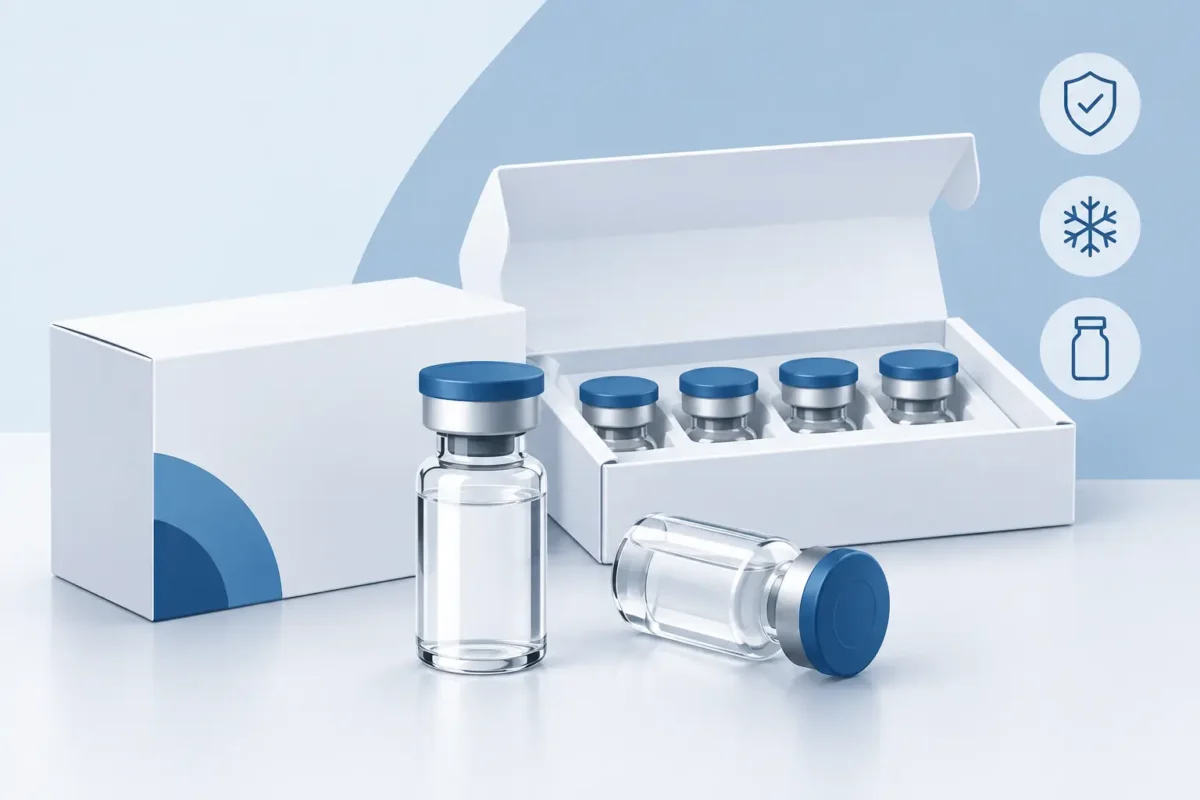
A research vial can look clean, arrive quickly, and still leave the buyer with unanswered questions. Professional peptide vial packaging is not decorative presentation. It is the physical system that helps protect a research material, identify its lot, communicate handling requirements, and give the receiving laboratory a clear basis for inspection before the vial enters inventory.
For research-use-only materials, packaging quality should be evaluated alongside compound specifications, lot-level documentation, and stated storage conditions. The vial is only one component, but it is the component that experiences filling, lyophilization, sealing, storage, fulfillment, shipping, and final handling. A weak point at any stage can create avoidable uncertainty.
What Professional Peptide Vial Packaging Is Designed to Do
A properly packaged peptide vial has several jobs at once. It must provide an appropriate container for the finished material, preserve closure integrity, display accurate identifying information, and arrive in a condition that supports confident receiving procedures. Those functions are connected. A clear label without a verifiable lot number is incomplete. A sealed vial without storage guidance still leaves the purchaser to guess at proper handling.
For lyophilized peptide products, the vial and closure system help maintain separation between the material and the outside environment during ordinary storage and transit. The glass vial, elastomeric stopper, and crimped seal should function as a matched system rather than as unrelated parts. The goal is not merely to close the container. It is to establish a dependable barrier and a visible indication that the vial has remained closed.
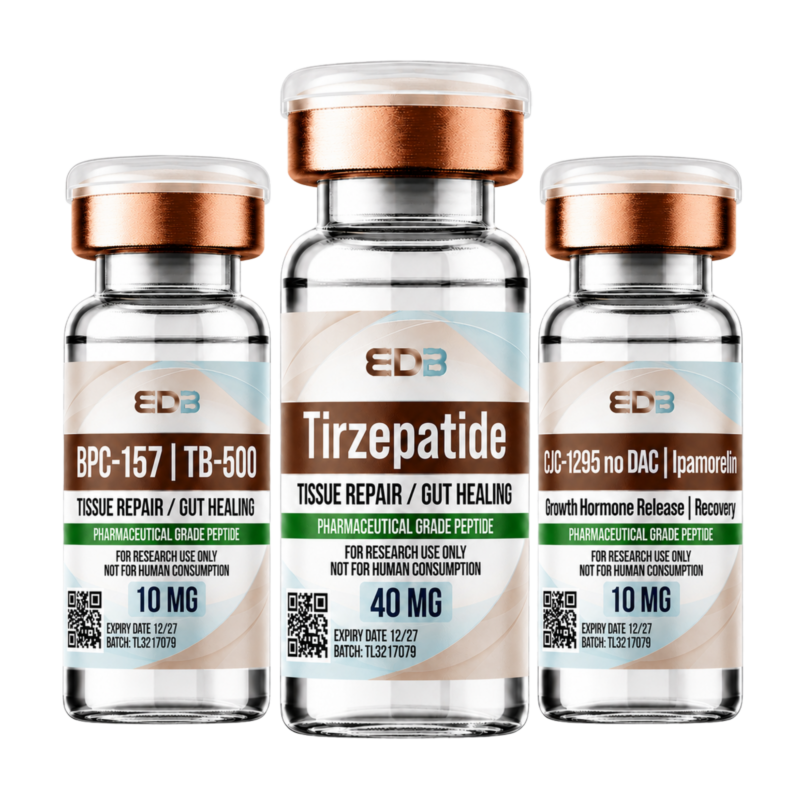
The best packaging also reduces routine handling errors. Buyers should be able to confirm the compound name, declared vial content, lot or batch reference, and relevant storage instructions without relying on memory or an unlabeled secondary bag. This matters most for laboratories maintaining multiple compounds, blends, or vial strengths at the same time.
The Vial, Stopper, and Crimp Seal
Type I borosilicate glass is widely used for sensitive laboratory materials because it offers strong chemical resistance and dependable performance across common storage conditions. Vial selection still depends on the product format, fill volume, lyophilization process, and intended closure configuration. A vial that is oversized, poorly matched to its stopper, or inconsistently filled can complicate handling even when the peptide itself meets specification.
The stopper is equally consequential. It must seat consistently and maintain closure integrity under the conditions expected for storage and shipment. The aluminum crimp cap secures the stopper in position. A correctly applied crimp should appear uniform, stable, and free from obvious deformation. It is not a substitute for analytical testing, but it is a practical visual checkpoint when a shipment is received.
Tamper-evident features add another layer of confidence. Depending on the packaging configuration, this may include a flip-off cap, shrink band, sealed outer pouch, or other secondary evidence that the product has not been casually opened after final packaging. These features should support traceability, not replace it. A tamper-evident seal has greater value when the vial label and associated documentation identify the same product and lot.
Labels Should Support Traceability at the Bench
A professional label should remain legible through normal refrigerated or frozen storage, routine inventory handling, and reasonable condensation exposure. Paper labels that lift, blur, or detach create a preventable chain-of-custody problem, especially when vials are separated from their original box.
At minimum, the primary label should clearly identify the research compound or blend, declared content, and lot or batch reference. Where space permits, an expiration or retest date, storage instruction, and research-use-only designation provide additional operational value. Secondary packaging can carry fuller handling information, but the vial itself should never become anonymous once removed from the carton.
For multi-peptide products, clear labeling is particularly important. Similar vial sizes and cap colors should not be the main method of differentiation. The exact blend name, declared quantities, and lot-specific documentation must do the work. This reduces the risk of inventory confusion when researchers store products such as single-compound vials alongside formulated peptide combinations.
Secondary Packaging Protects More Than Appearance
The outer carton, pouch, insert, and shipping materials are part of the product-protection system. Secondary packaging prevents vial-to-vial contact, reduces breakage risk, and keeps paperwork or handling instructions associated with the correct item. It should hold the vial securely without placing unnecessary pressure on the cap or label.
Shipping protection requires judgment rather than a one-size-fits-all approach. Temperature-sensitive materials may need insulation, cold packs, or defined shipping schedules, while other lyophilized products may primarily require protection from excessive heat, light, moisture, and physical impact. The correct approach depends on the material’s validated storage requirements and the expected transit profile.
Cold-chain-conscious fulfillment is valuable because it shows that transit conditions have been considered. Still, insulated shipping materials do not override the storage guidance for a specific product, and a cold pack is not automatically appropriate for every vial. Buyers should follow the product-specific instructions supplied with the lot rather than applying a universal rule across an entire peptide inventory.
Documentation Completes the Packaging System
Packaging communicates what a vial is. Documentation supports confidence in what is inside it. A lot-level certificate of analysis, third-party testing information where provided, and laboratory attestation create a traceable record that can be checked against the label at receiving.
This connection between vial and documentation is a meaningful quality signal. If a supplier cannot provide a clear lot identifier, or if the identifier on the certificate does not correspond to the product received, the purchaser has limited ability to verify the item before use in research. Professional presentation should make this comparison straightforward, not difficult.
EDB Peptides treats visible lot-level documentation and practical handling information as part of the purchasing experience because research purchasers need more than a product name on a storefront. They need a reasonable path from online specification to delivered vial, documented lot, and storage-ready inventory.
A Practical Receiving Check for Research Buyers
Receiving inspection should happen before vials are placed into long-term storage. It does not need to be complicated, but it should be consistent. Check the shipment against the order record, then inspect the primary and secondary packaging before opening or separating components.
A useful receiving review includes four checks:
- Confirm that the compound name, declared vial content, and lot reference match the order and available documentation.
- Inspect the vial for cracks, chips, moisture concerns, unusual residue, or an obviously compromised stopper or crimp seal.
- Review the supplied storage instructions and move the material to the appropriate controlled environment promptly.
- Retain the carton, label information, and lot documentation within the laboratory’s inventory records.
A lyophilized cake or powder can vary in appearance based on formulation and processing conditions. Visual appearance alone does not establish identity, purity, or suitability. At the same time, visible damage, missing labeling, or a mismatch in lot information should not be ignored simply because the vial appears intact.
Packaging Cannot Compensate for Missing Quality Controls
Professional peptide vial packaging is a necessary quality signal, but it is not proof of purity or identity by itself. An attractive carton, colored cap, or polished label should never carry more weight than lot-specific analytical documentation and transparent product specifications.
The inverse is also true: strong documentation deserves packaging that preserves the chain of information through fulfillment and receiving. When a vial, label, seal, storage instruction, and certificate all point to the same clearly identified lot, the buyer can make a more informed inventory decision with less friction.
For repeat purchasers, that consistency becomes operationally valuable. The goal is not packaging for its own sake. It is a predictable, traceable process that lets research materials arrive protected, identifiable, and ready to be handled according to their stated requirements. When the next vial reaches the bench, the packaging should answer the basic questions before they become problems.