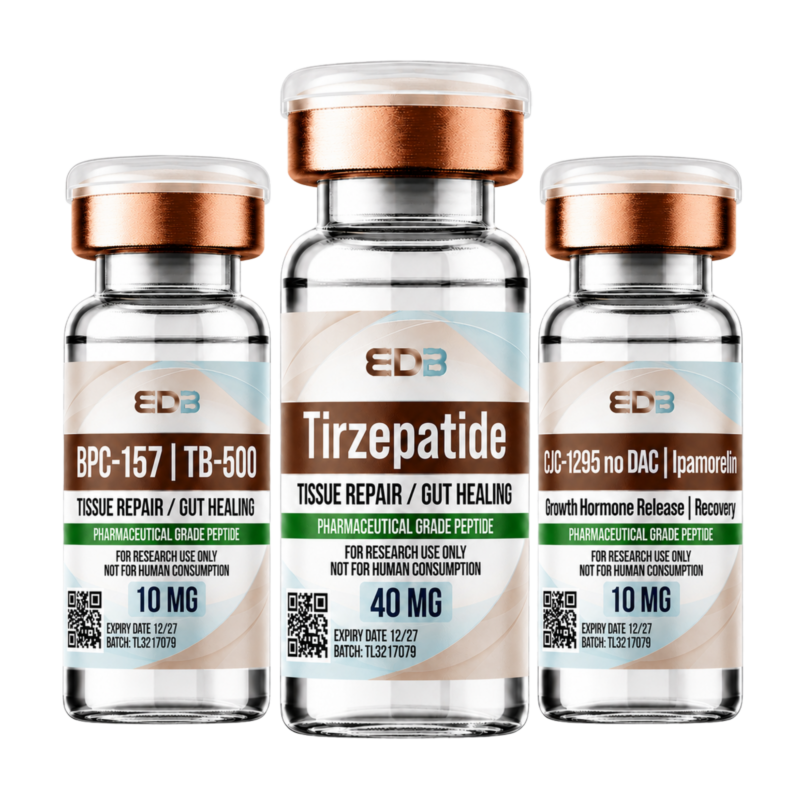
A peptide vial can look professional and still leave critical questions unanswered. The most consequential peptide vendor red flags are rarely limited to a basic website design or a low price. They appear in missing batch records, vague analytical claims, labels that do not match documentation, and fulfillment practices that give no indication of how product integrity is protected.
For research purchasers, supplier review should be treated as part of incoming-material qualification. A vendor does not need to disclose every proprietary operational detail, but it should provide enough product-specific information for a buyer to identify what was ordered, verify the associated lot, understand stated storage requirements, and make an informed receiving decision.
1. No Lot-Specific Certificate of Analysis
A generic certificate stating that a peptide is “99% pure” is not the same as a lot-specific certificate of analysis, or COA. If the same PDF appears across multiple products, has no lot number, lacks an issue date, or cannot be connected to the vial in hand, it has limited value for material traceability.
A useful COA identifies the product and batch or lot, reports the analytical result, and provides a date or other document-control reference. The vial label, product packaging, and COA should point to the same material. Differences in lot number, peptide name, mass, or concentration should be resolved before the material is introduced into a research workflow.
Documentation alone is not proof of every quality attribute. It is, however, a basic accountability measure. Vendors unable to provide lot-level records leave the purchaser with no practical way to distinguish one production batch from another.
2. Purity Claims Without a Test Method
Purity is often presented as a single number, but the meaning of that number depends on the method used. A supplier that advertises high purity without naming an analytical technique, reporting conditions, or supporting data is asking buyers to accept a conclusion without context.
For peptide materials, chromatographic methods such as HPLC or UPLC are commonly used to assess purity profiles. Mass spectrometry, including LC-MS where applicable, helps support molecular identity. These are different questions. A strong purity result does not independently confirm that the expected molecular species is present, and an identity result does not fully describe the impurity profile.
The right documentation depends on the compound and the supplier’s stated quality program. Still, a clear vendor should be able to explain which method supports which claim. Be cautious when every item has the same purity value, when reports omit method names entirely, or when the documentation does not identify the tested material.
3. Product Specifications Are Too Vague to Verify
The product name is not always enough to define a research material. Buyers may need to know the stated net peptide content, vial format, peptide form, sequence or molecular designation where appropriate, and whether the listing refers to a single compound or a blend.
This is especially relevant for products sold in milligram quantities. A listing that says only “10 mg peptide” without clarifying the compound, lot, or format creates avoidable uncertainty. For blends, the stated amount should make clear whether it refers to total material or the amount of each constituent.
Ambiguous specifications create problems downstream. They complicate inventory records, concentration calculations, reconstitution planning, and comparisons across suppliers. Precise product information is not an unnecessary technical detail. It is what allows a laboratory purchaser to confirm that the received vial matches the material ordered.
4. Reconstitution and Storage Guidance Is Missing or Generic
Lyophilized peptide handling does not begin and end with the product page. Once a vial arrives, buyers need practical instructions that are consistent with the supplied format and appropriate for research handling.
A responsible vendor should state storage expectations for the unopened material and provide clear guidance for reconstituted material. Information should be specific enough to support internal procedures, including storage temperature ranges, light considerations when relevant, and practical handling cautions. If a supplier offers concentration calculations, those calculations should identify vial content, diluent volume, and resulting concentration with units that can be checked.
Generic language such as “store properly” or “keep cold” is not sufficient. At the same time, purchasers should recognize that storage needs can vary by compound, formulation, and intended research timeline. A supplier that applies one identical storage statement to every peptide without qualification may be simplifying a decision that requires more care.
5. Packaging Does Not Support Product Identification
A clean label is not merely presentation. It is part of the chain between the listing, the COA, the shipment, and the research inventory. At minimum, packaging should allow the buyer to identify the product and distinguish one lot from another.
Red flags include unlabeled vials, labels that list only a nickname, packaging with no lot reference, or labels that appear inconsistent with the invoice and documentation. Missing tamper-evident features are also worth noting, particularly when a product changes hands during transit.
Professional packaging should protect both the vial and the information associated with it. A vial that survives shipment but arrives with an unreadable label, no supporting documentation, or uncertain product identity still creates a receiving problem.
6. Shipping Practices Ignore Transit Risk
Not every research peptide requires the same shipment configuration. The appropriate approach depends on the material, the season, transit duration, packaging design, and the supplier’s validated handling practices. That said, a vendor should be able to communicate how it approaches transit protection and what a buyer should do upon delivery.
Be cautious with suppliers that provide no dispatch information, no delivery expectations, and no process for shipments delayed or damaged in transit. Buyers should also be wary of vague promises of “cold shipping” that do not explain whether temperature-sensitive packaging is used for the specific order or how long it is intended to protect the material.
Upon receipt, inspect the outer package, confirm the vial count and labels, and retain packaging records if there is a concern. A dependable supplier will have a defined channel for addressing a fulfillment issue rather than leaving the customer to infer what happened.
7. The Vendor Avoids Basic Quality Questions
A transparent supplier does not need to reveal confidential manufacturing relationships to answer standard purchaser questions. It should be able to address whether documentation is lot-specific, what testing claims are being made, how products are packaged, and where to find storage or handling information.
Silence, evasive answers, or repeated reliance on marketing language are warning signs. So is a support process that cannot distinguish between a product question and a quality-documentation request. For repeat purchasers, responsiveness matters because questions may arise after delivery, during inventory review, or when comparing batches.
Quality communication should be accurate rather than exaggerated. Absolute claims such as “pharmaceutical grade” or “guaranteed results” are inappropriate when materials are offered for research use only. Clear RUO labeling and disciplined product language are stronger signals than unsupported superlatives.
8. Pricing Is the Only Evidence Offered
Low pricing is not automatically disqualifying. Suppliers can have different purchasing volumes, operating structures, and vial formats. But price should never be the sole basis for evaluating a research material.
An unusually low price becomes more concerning when paired with absent COAs, unclear fill information, generic labels, or weak customer support. In that scenario, the apparent savings may be offset by time spent resolving identity questions, replacing questionable inventory, or repeating work with poorly documented material.
Compare like for like: stated vial content, documentation level, testing claims, packaging, shipping practices, and service after delivery. A lower unit price can be reasonable. A lower price with no verifiable specification is simply an unknown.
9. No Clear Research-Use-Only Boundary
A credible research supplier should make its intended market and product limitations clear. Research-use-only language helps establish that materials are being sold for laboratory research and not as approved products for human or veterinary use.
This boundary also affects the quality of the purchasing experience. Vendors that encourage inappropriate use, make health outcome claims, or provide directions framed for administration are not demonstrating the disciplined, documentation-first approach expected of a professional research-material supplier.
For laboratory purchasers, the better standard is straightforward: product details should support identification, storage, reconstitution planning, and inventory control without drifting into unsupported claims.
A Practical Vendor Review Before You Order
Before placing an order, review one representative product page and its associated documentation. Confirm that you can identify the stated vial content, locate lot-level quality information, understand the analytical claims, and find handling and fulfillment expectations. Then consider whether those details would still be useful after the shipment is received and the material is entered into inventory.
The strongest suppliers reduce uncertainty before a vial reaches the bench. When a vendor makes traceability, documentation, professional packaging, and responsive support easy to evaluate, buyers can spend less time chasing basic records and more time maintaining controlled research operations.