A certificate of analysis should reduce uncertainty, not create another document to interpret. For research purchasers working with lyophilized peptides, peptide certificate of analysis verification is the practical process of confirming that a reported test result belongs to the exact lot, compound, and vial format being considered. A COA with an impressive purity number but no traceable lot connection provides far less confidence than a complete report that can be checked from product selection through receipt.
For research-use-only materials, documentation is part of the product specification. It supports purchasing decisions, inventory records, incoming-material review, and consistent handling practices. The goal is not simply to locate a percentage on a page. The goal is to determine what was tested, how it was tested, which lot was tested, and whether the document meaningfully supports the material in front of you.
What a Verifiable Peptide COA Should Establish
A useful COA starts with clear product identity. The report should identify the peptide by its accepted compound name and, when applicable, distinguish it from related forms or blends. This matters when compounds have similar names but different sequences, modifications, ester forms, salt forms, or molecular weights. A report for one form is not interchangeable with documentation for another.
The lot or batch number is the central traceability field. It should match the lot shown on the product label, packaging, or supplier-provided order documentation. If the COA references a generic product name but contains no lot number, it may describe a historical sample rather than the inventory being sold. Lot-level documentation is stronger because it connects a specific manufacturing or filling run to a specific test record.
A complete document also identifies the testing organization or laboratory, the report date, and an analyst, reviewer, or authorized signatory where applicable. These details do not automatically prove quality, but their absence limits accountability. A report should look like a controlled quality document, not a cropped image containing only a purity claim.
Read the Test Method Before the Purity Result
Purity percentage is often the first field buyers review. It is useful, but it has meaning only within the method used. For peptides, high-performance liquid chromatography, commonly abbreviated HPLC, is frequently used to assess chromatographic purity. The COA should state the method or otherwise identify the analytical technique used to generate the reported result.
An HPLC purity result indicates the relative area associated with a target peak under defined test conditions. It does not independently confirm that the peak is the intended peptide. Identity testing addresses a different question. Mass spectrometry, often shown as MS, LC-MS, or MALDI-TOF, can support identity by comparing observed mass with the expected molecular mass for the compound.
For a straightforward research peptide, documentation that pairs chromatographic purity testing with identity confirmation is generally more informative than a purity percentage alone. The precise test package can depend on the compound, its size, its formulation, and the supplier’s quality program. A blend also deserves closer review because its documentation should make clear whether the components were tested individually, the finished blend was assessed, or both.
Consider the result in context. A stated purity of 99% may appear precise, but buyers should still ask what the remaining fraction represents, whether the method resolution is appropriate, and whether the report is tied to the actual lot. Conversely, a lower stated purity may not automatically make a material unusable for every research setting. Acceptance criteria should reflect the intended laboratory application and internal research requirements, not a single number viewed in isolation.
Identity, Net Content, and Physical Description
Identity and purity are separate specifications, and a thoughtful review keeps them separate. A molecular mass result consistent with the expected peptide supports identity. Chromatographic data supports a purity assessment. Neither result, by itself, confirms vial fill quantity.
If a vial is represented as a specified mass of lyophilized material, review whether the supplier provides a net-content, fill-weight, or related quantity control. The relevant format will vary by product and packaging process. A COA may also list appearance, such as a white to off-white lyophilized cake or powder. Appearance is a useful receiving check, but it is not an analytical substitute for identity or purity testing.
The molecular weight listed on a report should also be plausible for the named material. This is especially helpful for distinguishing free peptides from modified analogs or salts. When reviewing a blend, do not assume that one molecular weight can represent every component without a clear explanation.
A Practical Workflow for Peptide Certificate of Analysis Verification
Verification is most reliable when performed before an order is placed and repeated when materials arrive. Start by comparing the product title, concentration or vial format, and compound form against the available COA. The names should align without unexplained abbreviations or substitutions.
Next, confirm that the report includes a legible lot or batch number. Save the COA with the purchase record. Upon receipt, compare the lot on the vial and outer packaging against the document. If a lot number is missing from the product label, ask the supplier how the supplied vial is tied to its quality documentation before placing it into research inventory.
Then review the analytical scope. At a minimum, determine whether the report addresses identity and chromatographic purity. Depending on the material and research program, additional controls may be relevant, including residual solvents, water content, microbial limits, endotoxin, or sterility-related testing. These are not universal requirements for every RUO peptide. Their relevance depends on the research environment, the intended experimental use, and internal laboratory controls.
Finally, assess document consistency. The compound name, lot number, testing dates, reported values, units, and any specification limits should make sense together. A date that predates the listed lot, a molecular mass inconsistent with the product, or a report that is visibly altered deserves a direct clarification from the supplier.
Common Documentation Gaps That Deserve Questions
Not every incomplete-looking COA indicates a problem. Some supplier formats are concise, and some testing details may be maintained in controlled records rather than displayed on a customer copy. Still, a buyer should pause when a report cannot establish basic traceability or analytical relevance.
Four situations deserve particular attention:
- A generic COA is posted for a product with no lot number or no way to connect it to current inventory.
- The report states a purity percentage but does not identify the test method or testing laboratory.
- A mass result, compound name, or molecular weight conflicts with the peptide being offered.
- The product is described as a blend, but the report does not clarify the identity or test scope for its individual components.
The appropriate response is not speculation. Ask for the lot-specific documentation, clarification of the test method, or an explanation of how the report corresponds to the product format. A quality-focused supplier should be able to explain its traceability process in direct, specific terms.
COAs Support Quality Control, Not Handling Shortcuts
A COA documents testing associated with a lot at a point in time. It does not eliminate the need for sound receiving, storage, or handling practices. Temperature exposure, repeated vial access, moisture, light, and avoidable delays after reconstitution can affect material integrity after it leaves the supplier.
For this reason, the COA should be reviewed alongside the product’s storage instructions and handling guidance. Retain the vial label, packaging, and lot record. Store unopened lyophilized materials according to the supplier’s stated conditions, and document preparation details within the laboratory’s own procedures. Accurate reconstitution calculations depend on the labeled vial content, selected diluent volume, and final concentration target, not on the purity percentage alone.
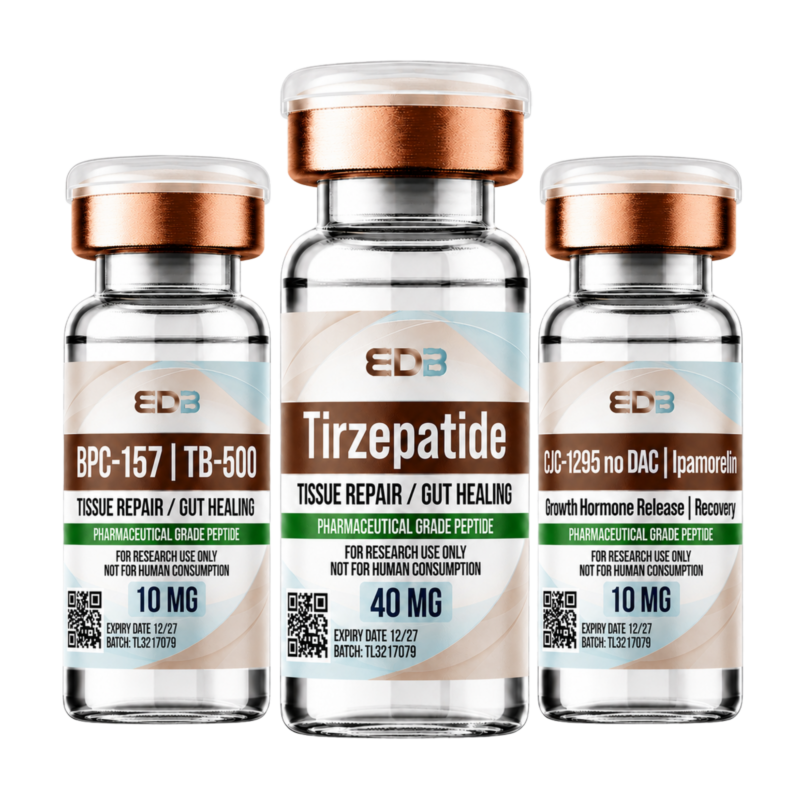
EDB Peptides centers lot-level documentation, practical storage details, and clear vial specifications because those elements work together. A purity result is more useful when it is paired with a traceable lot, professional packaging, and handling information that helps preserve the material’s condition after delivery.
The Right Standard Is Traceable Confidence
No single PDF can replace a laboratory’s internal quality system or validate a research outcome. But a well-prepared COA can provide a disciplined basis for supplier evaluation and material acceptance. It gives purchasers a record they can inspect, compare, retain, and question when something does not align.
Before adding a peptide lot to research inventory, make the document earn its place: match the lot, verify the compound form, understand the test methods, and confirm that the scope fits the work ahead. That small review step creates a cleaner chain of custody and more confidence in every vial handled afterward.
















4 thoughts on “Peptide Certificate of Analysis Verification”