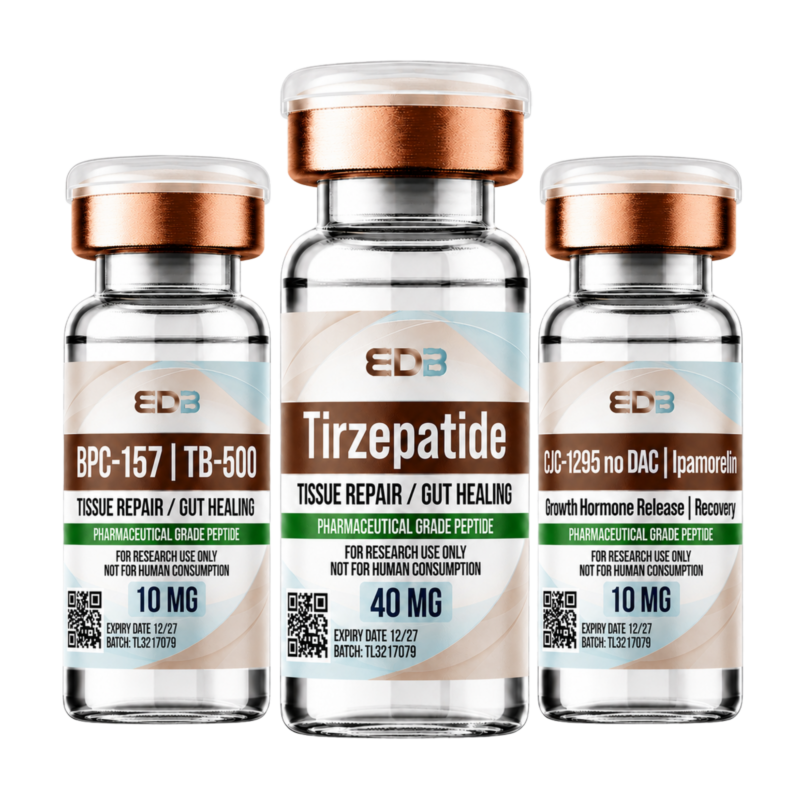
A peptide vial can be physically intact, professionally packaged, and still be unsuitable for a controlled research workflow if its identity cannot be verified. Research use only peptide labeling is not decorative packaging language. It is a practical control that communicates intended use, supports traceability, and helps researchers keep materials aligned with the documentation that accompanies them.
For experienced peptide purchasers, the label is often the first quality checkpoint after delivery. Before reviewing a certificate of analysis, recording receipt, or placing material into storage, the researcher should be able to confirm that the vial, outer package, and order documentation tell a consistent story.
What Research Use Only Peptide Labeling Communicates
A research-use-only, or RUO, designation identifies a material intended for laboratory research rather than human or veterinary administration, diagnosis, treatment, cure, or prevention of disease. That boundary should be clear wherever the product is presented, including the product listing, packaging, vial label, and supporting documentation.
The designation matters because peptide compounds can be discussed across scientific, commercial, and consumer contexts with very different standards of use. An RUO label does not establish clinical suitability, dosing guidance, sterility for administration, or regulatory approval. It identifies the intended research setting and helps prevent a laboratory material from being represented as something it is not.
Clear labeling also protects the integrity of procurement records. If a research operator receives multiple compounds with similar vial sizes or lyophilized appearances, visual inspection alone is not a reliable method of identification. Product name, net content, lot information, and storage direction provide the reference points needed to distinguish one material from another.
The Information a Peptide Label Should Make Easy to Verify
The exact layout of a label will vary with vial size, packaging format, and supplier process. The goal is not to fit every technical detail onto a small vial. The goal is to make the vial traceable to the correct product record without ambiguity.
At minimum, researchers should expect a clear compound or blend identity. This is particularly important when names are similar, when a product contains more than one peptide, or when the same compound is offered in different mass formats. A label that identifies only a broad category, rather than the actual material ordered, creates unnecessary uncertainty at the bench.
Net content should also be identifiable. For a lyophilized peptide, this is commonly expressed in milligrams or another applicable mass unit. The labeled amount is not a substitute for analytical verification, but it is necessary for inventory organization and for later concentration calculations performed under an established laboratory procedure.
A lot or batch identifier is one of the most consequential label elements. It connects the physical vial to lot-level documentation such as a certificate of analysis, testing record, or release documentation. If the vial lot cannot be reconciled with the accompanying COA, the material should be held from use until the discrepancy is resolved.
Storage language is equally operational. Many peptides require controlled cold storage, and the correct condition can differ between lyophilized material and a reconstituted preparation. A label or package insert should direct the researcher to the relevant storage requirements rather than leaving the receiving team to infer them from the compound name alone.
The following details work together to support a more controlled receiving process:
- Compound or blend name that matches the order record
- Net peptide content and vial format
- Lot or batch number tied to supporting documentation
- RUO designation and intended-use limitation
- Storage instructions or a clear reference to them
Where space is limited, outer packaging and lot-specific documentation can carry additional information. What matters is that the path from vial to records remains clear.
Why the Lot Number Deserves Special Attention
A lot number is not merely an inventory convenience. It is the anchor for traceability. It enables a researcher to match a vial to the correct COA, review stated analytical results, document receipt, and isolate affected inventory if a question arises later.
For repeat purchasers, lot-level traceability becomes even more valuable. A laboratory may have several deliveries of the same peptide in storage at once. Without a consistent lot identifier, it becomes difficult to determine which documentation applies to which vial, especially after products have been moved from their original shipping materials into a managed inventory system.
A useful receiving practice is to compare the lot number on the vial or package against the corresponding COA before the material enters long-term storage. Record the product name, lot number, quantity received, date received, and storage location in the laboratory inventory system. This creates a chain of reference that is much more reliable than memory or informal labeling alone.
Labeling and Documentation Must Agree
A well-labeled vial is necessary, but it is only one part of a documented quality process. Researchers should evaluate the label alongside the product specification and lot-level documentation. The details should agree on core points: compound identity, lot number, stated amount, and any relevant handling information.
A COA can provide analytical context, but it should be treated as a document attached to a specific lot, not as a generic marketing asset. A certificate that lacks an identifiable lot connection has limited value for controlled inventory. Likewise, a label with a lot number but no available documentation leaves the researcher without the information needed to evaluate that lot.
Third-party testing claims deserve the same disciplined review. Researchers should look for whether the documentation identifies the tested material, whether the lot reference is visible, and whether the stated results correspond to the item received. The appropriate level of review depends on the laboratory’s project requirements, internal quality system, and intended analytical work.
EDB Peptides centers lot-level documentation and practical handling information because traceability is most useful when it is available before uncertainty becomes a workflow problem.
Receiving and Storage: Where Labeling Becomes Operational
The delivery stage is where labeling either supports control or exposes gaps. Upon receipt, inspect the package condition, confirm the product and quantity against the order record, and verify that each vial or package is identifiable before it is separated from its documentation.
If cold-chain-conscious packaging is used, document the condition of the shipment according to the laboratory’s receiving procedure. A cold pack is not, by itself, proof of a specific temperature history. It is one part of a shipping approach. The more meaningful question is whether the material arrived in acceptable condition, with intact packaging, consistent identification, and storage instructions that can be followed immediately.
Once received, keep original labels legible. Avoid covering the product name or lot number with internal stickers. If an internal identifier is required, place it where it does not obscure supplier information, or use a linked inventory record. This small discipline prevents confusion when materials are later audited, transferred, or reviewed by another member of the research team.
Reconstituted materials require an additional layer of internal labeling. The original vial label should remain readable, while the laboratory’s internal record should capture the reconstitution date, diluent used, calculated concentration, preparer identifier, and storage location. Any dating convention should follow the laboratory’s approved procedure and the supplier’s applicable handling guidance. A calculated concentration should be independently checked when the work requires it.
Common Labeling Gaps That Create Avoidable Risk
Some issues appear minor until a researcher needs to reconcile inventory months later. A vial labeled only with a short nickname may be difficult to distinguish from a related blend. A missing lot number prevents a direct match to the COA. A storage instruction limited to a website reference can be less useful when a shipment is being received after hours or by staff who do not have immediate system access.
There is also a trade-off between label density and readability. Overloading a small vial with fine print can make critical details harder to locate. The better approach is a readable vial label for identity and traceability, supported by clearly associated outer packaging and documentation for fuller specifications.
Researchers should pause before using any material where the identity, lot association, packaging condition, or documentation is unclear. Quarantine and supplier contact are more efficient than attempting to reconstruct records after the material has been handled or combined with other samples.
A Label Is the Start of a Controlled Workflow
Research use only peptide labeling establishes a practical boundary and a traceability path. It tells the receiving researcher what the material is, how it is designated, which lot it belongs to, and where to find the records needed to evaluate it. When those details stay connected through receipt, storage, and internal handling, routine peptide inventory becomes easier to manage with confidence.
The most useful label is the one that still answers the essential questions when the vial is removed from its box, the shipment has been archived, and the next research step depends on knowing exactly what is in hand.