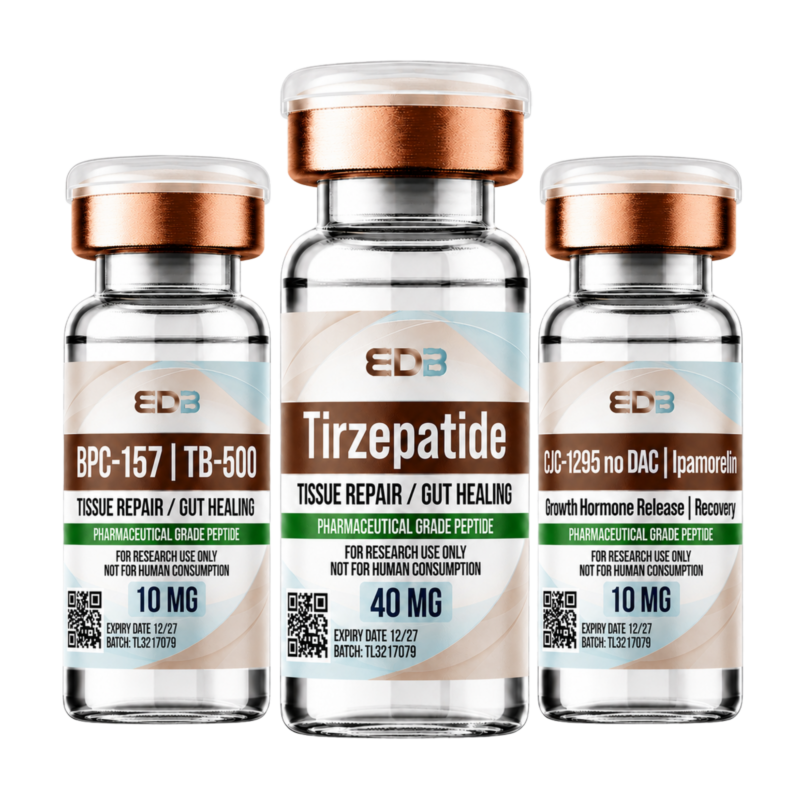
An IGF-1 LR3 research peptide is not a category where a vial label alone should drive a purchasing or experimental decision. For laboratory work, the usable value of an IGF-1 LR3 material depends on documented identity, lot-level testing, appropriate storage, and a handling plan that preserves consistency from the first aliquot through the final assay.
IGF-1 LR3 is commonly selected for research involving insulin-like growth factor signaling, cell-growth models, receptor activity, and related in vitro workflows. Its extended structure and altered binding characteristics distinguish it from native IGF-1, but those characteristics do not eliminate the need for careful control design. Matrix effects, cell type, media composition, passage history, and experimental endpoints can all change the observed response.
What Defines an IGF-1 LR3 Research Peptide?
IGF-1 LR3, also called long R3 insulin-like growth factor-1, is a modified analog of human IGF-1. The designation reflects two structural changes: an arginine substitution at the third position and an extended amino-acid sequence at the N-terminus. These modifications are generally discussed in research literature because they can reduce interaction with certain IGF-binding proteins compared with native IGF-1.
For a research purchaser, that description is only the starting point. The analytical identity of the supplied material, its stated purity, vial fill, and lot documentation determine whether a material can be evaluated with confidence before it enters a study. A peptide may carry the same product name as another offering while differing substantially in traceability and supporting records.
IGF-1 LR3 is a sensitive research material, not a standardized shortcut to a biological result. Researchers should define the intended model, control conditions, readout timing, and comparators before selecting concentrations or preparing solutions. Results obtained in one cell line or assay format should not be assumed to transfer directly to another.
Documentation Is Part of the Material Specification
For repeatable laboratory work, quality documentation should be treated as part of the product, not as an optional supplement. A lot-specific certificate of analysis provides a record that can be retained alongside assay notes, inventory records, and result files. This creates a clearer chain between the material used and the data generated.
A useful documentation review begins with identity and purity claims, then checks that the certificate corresponds to the actual lot received. Researchers may also evaluate test methodology, batch designation, issue date, stated net content, and any available handling information. Where a supplier makes third-party testing or laboratory attestation claims, those statements should be supported by documentation that is easy to match to the shipment.
Purity figures deserve context. A single percentage does not describe every variable that can affect performance, including storage history, reconstitution practices, repeated temperature cycling, or compatibility with the intended matrix. Still, transparent purity and identity records establish a stronger baseline than an undocumented vial.
Why Lot Traceability Matters
Lot traceability is especially valuable when a workflow spans multiple weeks, operators, or experimental batches. If a response changes unexpectedly, researchers need to distinguish between normal biological variation, procedural changes, and material-related variables. Recording the lot number, receipt date, reconstitution date, storage location, and prepared-solution identifier makes that review much more practical.
For new lots, a limited qualification run can be more informative than immediately replacing a previously used material in an ongoing study. Holding constant the assay conditions, controls, and documentation process helps identify whether observed differences are within the expected range for the model.
Storage and Reconstitution Planning
Lyophilized IGF-1 LR3 should be managed according to the supplier’s product-specific storage instructions and the laboratory’s validated procedures. Until use, storage conditions should be stable, clearly logged, and protected from unnecessary handling. Repeated warming and cooling can introduce avoidable uncertainty, particularly when inventory is accessed frequently.
Before reconstitution, confirm the stated vial content and calculate the target stock concentration. The calculation should be documented in a way another trained operator can verify: total peptide mass, diluent volume, resulting concentration, preparation date, and preparer initials. This is basic laboratory discipline, but it prevents common errors when multiple vial strengths or solution concentrations are in use.
The chosen diluent and vessel should be appropriate for the study and consistent with internal laboratory procedures. Researchers should consider adsorption risk, solution compatibility, required sterility, and downstream assay interference rather than applying one preparation approach to every peptide. When assay-ready working solutions are needed, preparing controlled aliquots can reduce repeated access to the primary stock.
Visual inspection is a useful handling checkpoint, but it is not an identity or purity test. A clear solution does not confirm that a peptide has been stored correctly or remains suitable for every intended application. The most dependable approach combines supplier documentation, controlled storage, preparation records, and experiment-specific verification.
Designing Research Around IGF-1 LR3 Variables
IGF-1 LR3 can influence signaling pathways that are highly dependent on context. Serum conditions, endogenous growth factors, receptor expression, binding proteins, treatment duration, and cell density may all affect an outcome. That is why a narrowly defined question produces better data than a broad expectation that the material should generate a particular result.
Use appropriate controls that answer the actual experimental question. Depending on the model, this may include vehicle controls, untreated controls, a relevant comparator, positive controls, and independent biological replicates. A concentration-response design can be useful when it is justified by the study objective, but it should be interpreted alongside cytotoxicity, viability, and assay-specific interference checks where applicable.
Timing also matters. Early signaling readouts and later phenotypic outcomes do not measure the same biological event. If the objective is pathway activation, a time-course approach may provide more useful context than relying on a single endpoint. If the objective is a longer-term cell response, media refresh practices and solution stability during the experiment should be considered in advance.
Avoiding Overinterpretation
A measurable response does not by itself establish mechanism. IGF-related signaling can overlap with other growth-factor pathways, and cell culture systems often contain variables that are difficult to isolate completely. Confirmatory methods, carefully selected inhibitors or comparators, and repeat experiments across independent passages can strengthen interpretation.
The same caution applies to transferring findings beyond the tested system. Research-use-only materials are intended for laboratory research and are not approved for human or veterinary use. Product specifications and experimental observations should never be treated as medical guidance, safety claims, or a basis for administration.
Supplier Evaluation for Research Purchasers
When comparing IGF-1 LR3 offerings, the lowest listed price rarely captures the full cost of a material. Missing records, ambiguous vial content, inadequate packaging, or unclear storage guidance can create delays and compromise study continuity. A supplier should make it straightforward to determine what is being purchased, how it was documented, and how it should be handled upon receipt.
Practical quality signals include lot-level certificates of analysis, stated vial format, professional labeling, protective packaging, clear research-use-only language, and accessible storage and reconstitution guidance. Reliable order processing and shipment practices matter as well, particularly for materials that may be exposed to changing transit conditions.
EDB Peptides approaches these details as part of the research purchasing experience, pairing documented inventory with lot-level quality records and practical handling information. For researchers, the goal is not simply to acquire an IGF-1 LR3 vial. It is to receive material with a documentation trail that supports organized, repeatable laboratory work.
A well-controlled IGF-1 LR3 study starts before the vial is opened: verify the lot, define the experimental question, document the preparation plan, and preserve enough records to make the next result easier to trust.