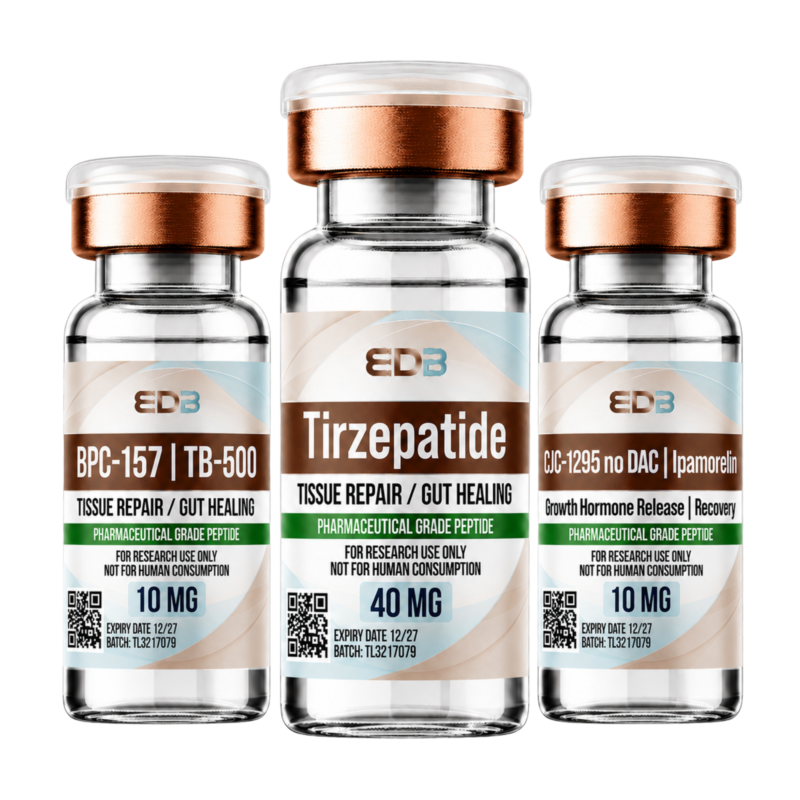

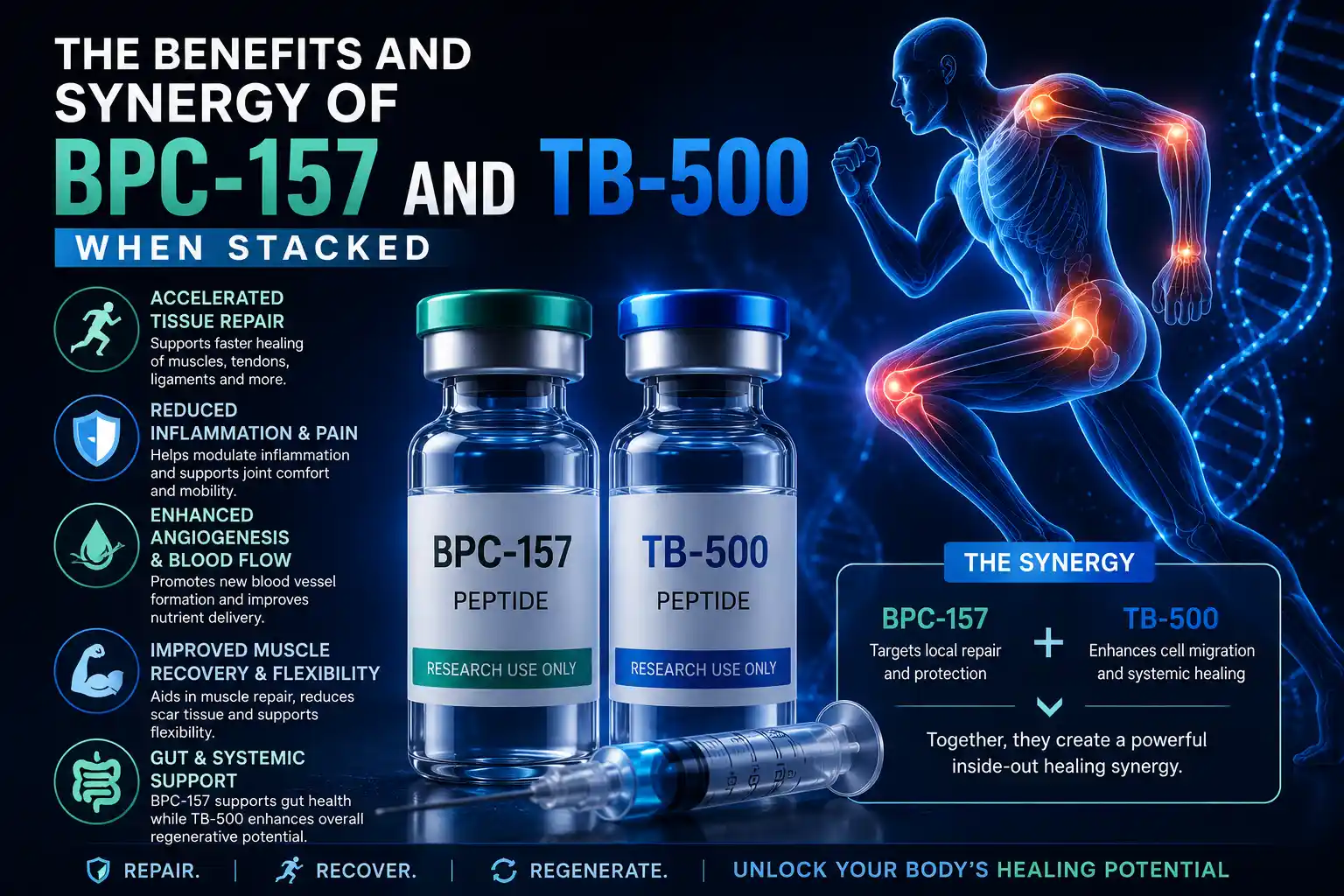
The BPC-157 & TB-500 Stack, commonly known as the Wolverine Stack, is one of the most widely discussed peptide combinations in regenerative and recovery research. By combining these two investigational peptides, researchers explore their potential synergistic effects on tissue repair, inflammation regulation, angiogenesis, and overall recovery.
If you’re researching the BPC-157 and TB-500 synergy for injury recovery, musculoskeletal health, or regenerative science, this guide explains how the stack works, its potential benefits, and what current research supports.
How BPC-157 & TB-500 Work Together
BPC-157 (Body Protection Compound-157) is a synthetic peptide derived from gastric proteins. It has been extensively investigated for its potential role in:
- Supporting angiogenesis (formation of new blood vessels)
- Promoting tendon, ligament, and muscle repair
- Modulating inflammatory pathways
- Supporting gastrointestinal tissue integrity
- Enhancing localized healing responses
TB-500, a synthetic peptide associated with Thymosin Beta-4 research, has been studied for its effects on:
- Cell migration
- Tissue remodeling
- Angiogenesis
- Wound healing
- Connective tissue recovery
- Flexibility and mobility
When combined, these peptides are believed to complement one another. BPC-157 primarily supports localized repair and protective signaling, while TB-500 contributes broader systemic regenerative activity through enhanced cellular migration and tissue remodeling.
Key Benefits of the BPC-157 & TB-500 Stack
1. Accelerated Tissue Repair & Injury Recovery
The Wolverine Stack is primarily researched for supporting recovery of:
- Muscles
- Tendons
- Ligaments
- Connective tissues
- Soft tissue injuries
Preclinical studies suggest enhanced healing following strains, tears, and surgical injuries.
2. Reduced Inflammation & Improved Comfort
Both peptides have demonstrated anti-inflammatory properties in experimental research.
Together, they may help:
- Regulate inflammatory responses
- Support joint comfort
- Promote mobility during recovery
- Reduce tissue irritation
3. Enhanced Angiogenesis & Blood Flow
Healthy blood supply plays a critical role in tissue repair.
Research suggests this combination may support:
- New blood vessel formation
- Improved nutrient delivery
- Enhanced oxygen supply to damaged tissues
- Better healing of poorly vascularized structures such as tendons
4. Improved Muscle Recovery & Tissue Remodeling
TB-500’s role in cellular migration complements BPC-157’s localized repair mechanisms.
Researchers investigate the combination for:
- Faster muscle recovery
- Reduced scar tissue formation
- Improved flexibility
- Enhanced connective tissue remodeling
5. Potential Gastrointestinal & Systemic Support
BPC-157 has been widely studied for gastrointestinal protection, while TB-500 has broader regenerative properties.
Together, researchers explore their potential role in supporting:
- Gut health
- Connective tissue repair
- Systemic recovery pathways
- Overall regenerative biology
Note: Most evidence supporting the BPC-157 & TB-500 Stack comes from preclinical and animal research. Human clinical data remain limited, and the combined effects have not been conclusively established in large clinical trials.
Typical Research Protocols (Research Context)
Common research protocols may include:
- BPC-157: 200–500 mcg daily (often administered near the area being studied)
- TB-500: Loading phase of 2–5 mg twice weekly, followed by a maintenance protocol
- Duration: Typically 4–12 weeks
- Administration: Separate subcutaneous injections (generally not mixed in the same vial due to formulation differences)
Research protocols should always follow appropriate laboratory standards and professional oversight.
Who Might Explore the BPC-157 & TB-500 Stack?
This peptide combination is commonly investigated by:
- Researchers studying musculoskeletal healing
- Sports recovery researchers
- Individuals exploring post-surgical recovery models
- Those investigating connective tissue regeneration
- Researchers interested in inflammation and tissue remodeling
Safety & Considerations
Current research suggests that both peptides are generally well tolerated in preclinical studies.
Reported observations include:
- Mild injection-site irritation
- Limited short-term adverse effects
However:
- Long-term human safety remains insufficiently studied.
- Human clinical evidence is still limited.
- Product purity and independent laboratory testing remain essential when conducting research.
Important Disclaimer: This information is provided for educational and research purposes only and should not be interpreted as medical advice. Research peptides such as BPC-157 and TB-500 are investigational, and their legal status varies by jurisdiction. EDB LLC supplies peptides exclusively for laboratory research and educational use. Always follow applicable laws and consult qualified professionals where appropriate.
Choosing High-Quality Peptides for Research
When selecting research peptides, prioritize suppliers that provide:
- 98%+ purity
- HPLC/MS-verified Certificates of Analysis (COAs)
- Transparent manufacturing standards
- Third-party quality testing
EDB LLC is committed to providing high-quality research peptides supported by comprehensive documentation.
Frequently Asked Questions
What is the Wolverine Stack?
The Wolverine Stack is the common name for the combination of BPC-157 and TB-500, researched for their complementary roles in tissue repair and regenerative biology.
Do BPC-157 and TB-500 work better together?
The peptides act through different biological pathways, making the combination scientifically plausible. However, there are currently no large human clinical trials proving that the stack is superior to either peptide used individually.
How long does a typical research cycle last?
Most research protocols investigate the stack over 4–12 weeks, depending on the study objectives.
Where can researchers source high-quality BPC-157 and TB-500?
Researchers should look for suppliers offering high-purity peptides, third-party laboratory testing, and HPLC/MS-verified COAs, such as EDB LLC.
Ready to Learn More?
Explore EDB LLC’s collection of high-quality research peptides or contact our team for additional information. Combining quality research materials with well-designed protocols helps support meaningful scientific investigation.